Data Ethics

  • Econometric Accelerator: A Project of the Quantum & AI Lab

    Econometric Accelerator: A Project of the Quantum & AI Lab

    The Econometric Accelerator is the artificial intelligence-based macroeconomic forecasting system created by the Luiss Quantum & AI Lab, developed in collaboration withthe Italian International Economic Center (IIEC), computational support from CINECA, and data partnerships and sponsorship from Intesa Sanpaolo and Nexi.

    The project addresses a fundamental limitation of traditional econometric models: their inability to maintain accurate forecasting ability during periods of structural change, systemic shocks, and regime shifts. By integrating artificial intelligence, principles of econophysics, and alternative high-frequency data sources, the Econometric Accelerator introduces a new forecasting paradigm that overcomes the assumptions of linearity and stationarity inherent in classical econometrics.

    The system integrates official macroeconomic indicators with high-frequency alternative data sources—including transactions made via electronic payments, data on energy consumption, tourism flows, and sentiment indicators—harmonized through an advanced computational pipeline and processed using a hybrid architecture of artificial intelligence model ensembles. The project was officially unveiled on May 6, 2025, at Luiss University in Rome and garnered attention from major financial media outlets, including Il Sole 24 Ore and Milano Finanza.

    The architecture developed by the Lab is modular, scalable, and geographically agnostic, allowing it to be applied in different countries and to various macroeconomic indicators, including GDP, inflation, and industrial production. A theory-driven mapping protocol ensures that every high-frequency signal is traced back to a structural economic component, preserving theoretical consistency while leveraging the pattern-recognition capabilities inherent in modern artificial intelligence systems.

    Preliminary validation of forecasts for Italian GDP has shown that the system significantly outperforms traditional institutional models, particularly during the period of extreme volatility caused by the COVID-19 pandemic, when conventional approaches exhibited systematic forecasting errors.

    The Econometric Accelerator reflects the Lab’s commitment to bridging the gap between academic research and institutional decision-making, offering policymakers and market participants a more resilient, transparent, and adaptive tool for navigating an increasingly complex global economy.
  • Recommendation Systems in the Best Interests of Children

    A project carried out in collaboration with Google and the LawLab Observatory (Digital Law Laboratory) of the “Vittorio Bachelet” Research Center on Public Administration

    The report *Recommendation Algorithms and the Best Interest of the Child*, which examines the relationship between recommendation systems, child protection, and the principle of the best interest of the child in the digital space, is currently being published. The study, sponsored by Google Europe, provides an overview of the relevant European legal framework, focusing in particular on the interplay between the GDPR, the Digital Services Act, the AI Act, and consumer protection laws, to determine whether current legislation is already capable of providing effective protection for minors exposed to algorithmic profiling and personalization practices.

  • 1st Public Ethics Festival – “Vite Digitali” (Digital Lives)

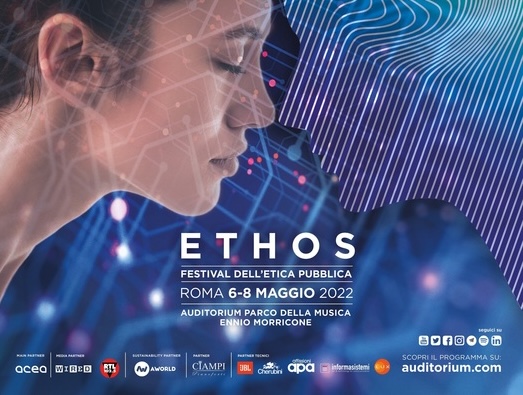
    1st Public Ethics Festival – “Vite Digitali” (Digital Lives)

    Ethos, Public Ethics Observatory, periodically organizes days of discussion on the most pressing issues of the moment. The first edition of the Public Ethics Festival, held from May 6 to 8, 2022, at the Ennio Morricone Auditorium Parco della Musica, was entitled: “Digital Lives”: The Social, Political and Moral Consequences of Artificial Intelligence.

    Director Sebastiano Maffettone and CEO of the Musica per Roma Foundation Daniele Pittèri opened the event. The keynote speakers included Casper Klynge, Microsoft Vice President for European Government Affairs, Mario Rasetti, Professor Emeritus of Theoretical Physics at the Polytechnic University of Turin, and Giuliano Amato, President of the Constitutional Court.

    The relationship between Ethics and Artificial Intelligence, explored in relation to issues such as social innovation, sustainability, religion and spirituality, war and weapons, robotics, healthcare, economic development, new educational models, human enhancement, and artistic creation, was among the topics discussed by a broad range of guests, including Paolo Benanti, Derrik de Kherckhove, Marta Bertolaso, Bruno Siciliano, Paola Severino, Vincenzo Paglia, Pietro Labriola, Luigi Nicolais, Giorgio Ventre, Jeffrey Schnapp, Andrea Prencipe, Guglielmo Tamburrini, and Stefano Songini.

    For the full programme: click here