10th December 2020, 6.00 (PST) Zoom and FB live
ad-peco
-

Kashmir under sanctity of un declaration of human rights
-

A Republican Europe of States
Venerdì 27 Novembre 2020, 16-18 Zoom
A webinar with the author of the book
Richard Bellamy
Coordination Marco Baldassari
Discusant
Valentina Gentile “Republican Intergovernmetalism, a realistic utopia?”
Glyn Morgan
Dimitrios Efthymiou
Philip Van Parijis
-

Spaces of Tolerence: Changing Geographies and Philosophies of Religion in Today’s Europe
What are the challenges of negotiating religious tolerance in today’s Europe? Pver the past decade, religion and religious individuals have become increasingly framed as both an internal and external security threat to European states. This edited collection of essays examines the changing politics and geopolitics of religious freedom by looking to how understandings of religious freedom and “tolerance” touch down in specific places and specific practices across Europe, bringing together theoretical and philosophical reflection with ethnographic analysis of contexts ranging from Belgium, Denmark, France and Italy, to the UK and Turkey. The seminar will present the main finding of the volume and discuss the challenges of concepyualizing question of tolerance from a multi-disciplinary and multi-sited perspective.
You are cordially invited to the presentation and discussion of the edited volume “Spaces and Tolerance”: Changing Geographies and Philosophies of Religion in Today’s Europe, edited by prof. Luiza Bialasiewicz (University of Amsterdam) and dr. Valentina Gentile (Luiss Guido Carli University), published by Routledge.
Program
Welcome
Prof. Lautaro Roig Lanzillotta(Royal Netherlands Institute in Rome)
Introduction: Theorizing Tolerance in Today’s Europe
Prof. Luiza Bialasiewicz (University of Amsterdam)
Dr. Valentina Gentile (Luiss Guido Carli)
Discussion
Prof. Francesca Maria Corrao (Luiss Guido Carli)
Prof. Sebastiano Maffettone (Luiss Guido Carli)
The authors will be present
-

MANCET Manchester Centre for Political Theory: Disability and Political Theory from Status and Distributive Justice to Citizenship
Convenors
Domenico Melidoro Luiss University
Eva F. Kittay (Stony Brook University), TBC
Nynke van Uffelen (University Center Saint Ignatius Antwerp): “Honneth’s Theory of Recognition and Intellectual Disabilities: An Emancipatory Potential”
Domenico Melidoro (Ethos Luiss Business School): “Liberalism, Diversity, and Disability”
These are the Zoom links for the 4 days of our workshop.
Topic: Disability Political’s Zoom Meeting – Day 1
Time: Sep 8, 2020 02:30 PM LondonJoin Zoom Meeting
https://zoom.us/j/92714353932Meeting ID: 927 1435 3932Topic: Disability Political’s Zoom Meeting – Day 2
Time: Sep 9, 2020 02:30 PM LondonJoin Zoom Meeting
https://zoom.us/j/92515178990Meeting ID: 925 1517 8990Topic: Disability Political’s Zoom Meeting – Day 3
Time: Sep 10, 2020 02:30 PM LondonJoin Zoom Meeting
https://zoom.us/j/95826159104Meeting ID: 958 2615 9104Topic: Disability Political’s Zoom Meeting – Day 4
Time: Sep 11, 2020 02:30 PM LondonJoin Zoom Meeting
https://zoom.us/j/94341915728Meeting ID: 943 4191 5728 -

Transitional Justice and Democracy
International Research Workshop
The aim of the Workshop – organized by Valentina Gentile Assistant Professor Luiss in Political Philosophy and co-sponsored by Luiss Department of Political Science – is to explore the link between Transitional Justice and Democracy on practical, moral and normative grounds.Introduction and Welcome Remarks
Andrea Prencipe Rector LuissConfirmed Speakers
Emanuela Ceva Geneva University – Negative moral emotions and the transformation of relationships dynamics in processes of transitional justice
Darrel Moellendorf University of Frankfurt – Public Reason, Reconciliation, and Hope
Colleen Murphy University of Illinois, College of Law – Transitional Justice and the Crisis of Democracy
Valentina Gentile and Megan Foster Luiss University – Towards a Minimal Conception of Transitional Justice -

Towards a Minimal Conception of Transitional Justice
The UN Secretary General defined transitional justice as “the full range of processes and mechanisms associated with a society’s attempts to come to terms with a legacy of large-scale past abuses, in order to ensure accountability, serve justice and achieve reconciliation”. In conflict and post-conflict societies the process of coming to terms with the past and fostering an ethical community is a vital step in the path towards a (re)building stable social order. The philosophical discussion on transitional justice explores this process and questions which methods and mechanisms are most appropriate, justified or morally correct. Despite the relatively recent origin of the philosophical debate on transitional justice an impressive body of literature has grown up around the topic.
-
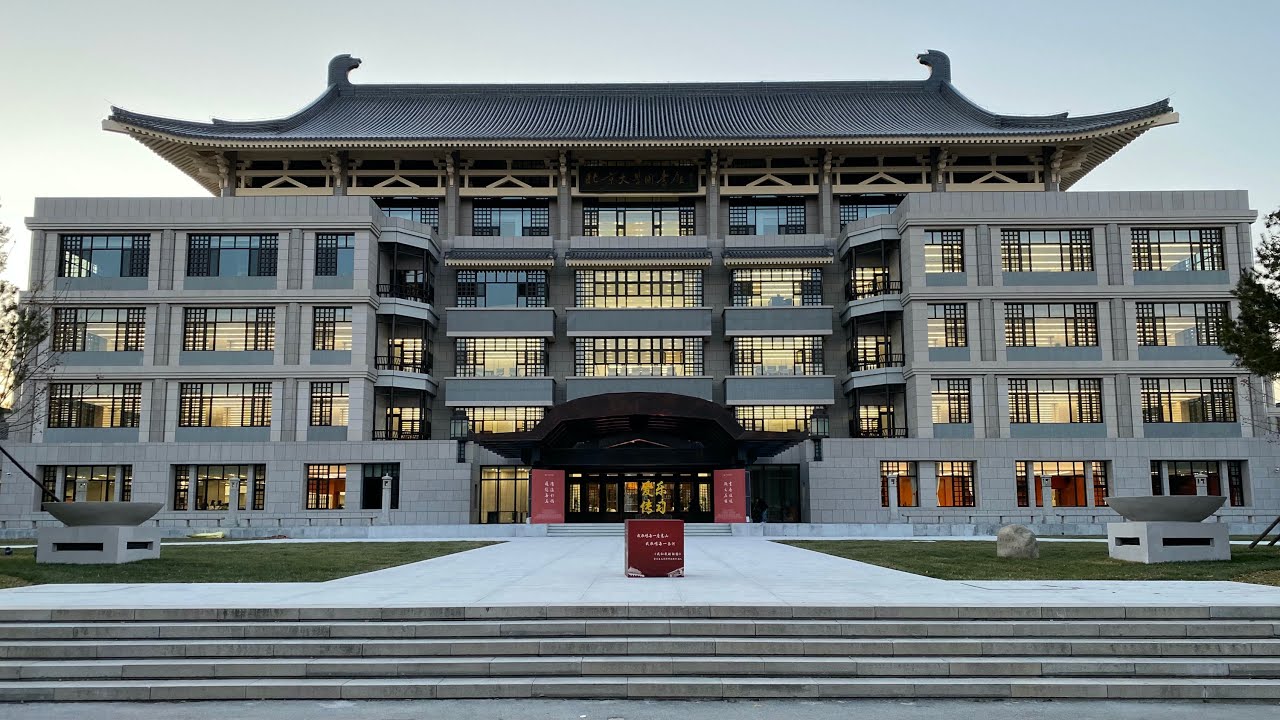
Prof. Maffettone’s Seminars in China
Westernern Political Theory; Contemporary Political Thought in the Middle East; Marxism as a theoretical and methodological framework in political Science; Chinese political Theory seen by an European Philosopher.